
House Construction Cost in Nepal: What It Really Costs Per Square Foot (2026)
What house construction actually costs per square foot in Kathmandu, Bhaktapur and Lalitpur in 2026, what drives the number up or down, and the costs people forget to budget for.
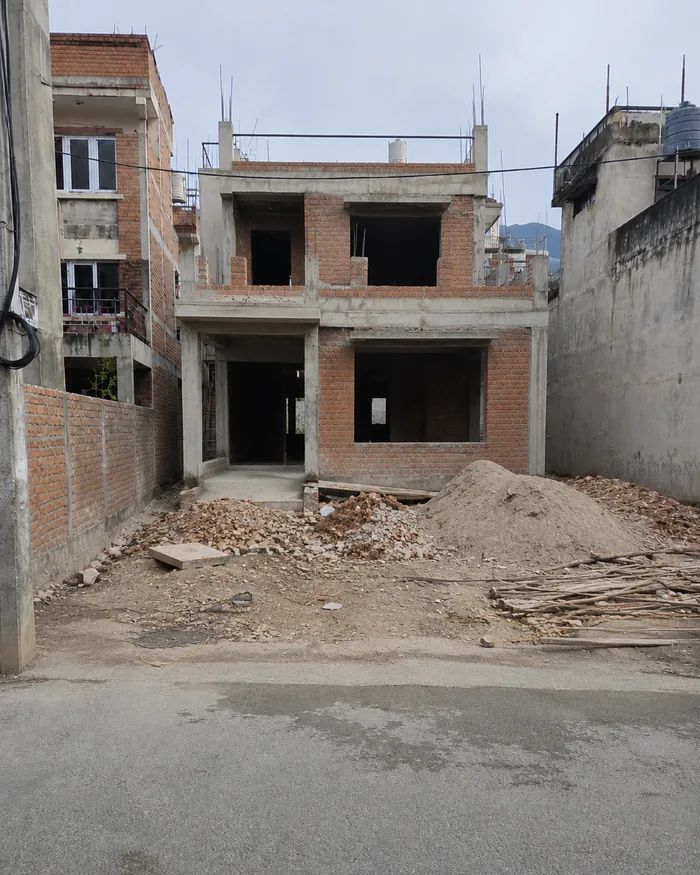
The first question almost everyone asks us is some version of "what will it cost per square foot?" It is the right question, but the honest answer has a range in it, and anyone who gives you one confident number without seeing your plot is guessing.
The 2026 range in the Kathmandu Valley
For residential construction in Kathmandu, Bhaktapur and Lalitpur, the broad market range in 2026 sits at roughly NPR 3,200 to 4,500 per square foot for standard finishes, and above that for high-end work. Structure alone — foundation, RCC frame, walls and slab — usually accounts for a little under half of that. The rest is finishing, and finishing is where the range comes from. Two houses of identical size on the same street can differ by fifty percent, and the difference is almost never the concrete.
What actually moves the number
Finishing level is the biggest lever by far. Flooring, kitchen, sanitary ware, windows and joinery can each be specified at two or three very different price points. Plot shape is the second: a narrow or irregular plot needs more wall for the same floor area, and setback rules in the valley can force an inefficient footprint. Soil matters too — much of the valley floor is old lake bed, and soft ground means deeper footings, which is money spent below the plinth where you will never see it. Finally, number of storeys: the foundation is sized for the full height from the start, so the first floor carries a disproportionate share of the cost.
The costs people forget
Budgets usually break not on the main contract but on the items outside it. Drawing and municipal approval fees. Boundary wall and gate. Site levelling or retaining where the plot is not flat. Water tank, pump and the electrical connection. Septic tank or sewer connection. Temporary power and water during construction. And the one that catches almost everyone: furniture and curtains after handover, once the money is already spent. Put a line in for each of these before you start rather than meeting them one at a time.
Why per-square-foot quotes can mislead
A single rate per square foot is easy to compare and easy to hide things inside. Two quotes at the same rate can include very different specifications — a different cement grade, thinner steel, cheaper sanitary ware, or the boundary wall excluded. Ask for an itemised quotation instead. It is harder to compare at a glance and far more honest, and it lets you see which line you can adjust when the total comes in above what you hoped.
Frequently asked questions
How much does it cost to build a house in Kathmandu in 2026?
For standard finishes, roughly NPR 3,200 to 4,500 per square foot of built-up area in the Kathmandu Valley, with high-end finishing going above that. A 1,500 sq ft house at mid-range specification therefore lands somewhere around NPR 55 to 65 lakh for the main contract, before boundary wall, approvals and connections.
Is it cheaper to build in Bhaktapur than Kathmandu?
Construction rates are broadly similar across the valley because material and labour come from the same market. What differs is land price and, sometimes, access — a site on a narrow lane that a mixer truck cannot reach adds handling cost wherever it is.
What is the cheapest way to reduce construction cost?
Reduce finishing specification, not structure. Simpler flooring, fewer false ceilings and standard sanitary ware can take a large amount off the total without affecting how long the building lasts. Cutting cement grade, steel or curing time saves comparatively little and costs far more later.